
The Chessboard Method
Have you ever played the game of chess?
Yes, that incredible game where black and white pieces create immense obstacles for each other, making it impossible for the opposition to crack the maze. They battle to save their queen/Kingdom without compromise, agreement, or deception.

Every player knows their significance and strategically tangles the opposition in its web. They comprehend that a wrong move can be the reason for losing their empire.
The scriptwriting/screenwriting is similar to chess, where writers work in a dual role. Here, the “Black pieces” are the writer as an antagonist, and the “White pieces” are the writer as a protagonist.
Under this concept, writers control both sides and consistently create hurdles so that nothing can be easy for anyone. Their vision tries to organically puzzle the movement, where both act out every effort to defeat the opposition.
A point to remember: “Black pieces” and “White pieces” aren’t standard terminology in screenwriting, like inciting incident, want, or stakes. It is a symbolic interpretation in the storytelling inspired by chess imagery, duality and moral contrasts.
So, let’s profoundly understand it.
Black Pieces — The Writer as the Antagonistic Force
Before starting anything, answer this question,
Which stories do the audience find thrilling, gripping and Unique?
- Where the protagonist is portrayed as the strongest character or
- The antagonist is the most influential one.
Tell me.
The answer is second.
The most commendable stories always have an assertive antagonist. Creating a decisive antagonist is one of the most crucial techniques in scriptwriting to seize the viewer’s attention.
John Truby has said in The Anatomy of Story, “Writers make mistakes to separate the protagonist from other characters. The result is not only a weak hero but also cardboard opponents and minor characters who are even weaker.”
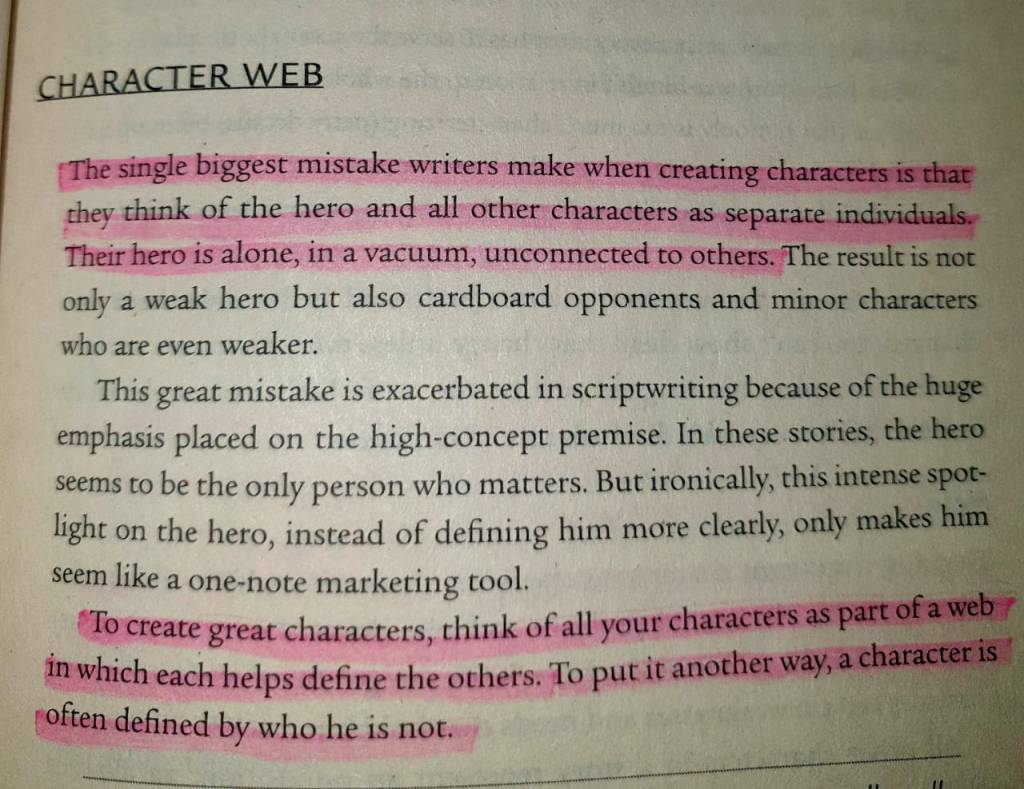
Your antagonist could be a person/incident/emotion. It may change with the genre, the story and the world. Whatever it will be, it should dominate the protagonist’s world.
A writer as an antagonist should remember that their creation should be seen as organic and believable. A compelling villain makes the story interesting and realistic. For that, a writer needs to work profoundly on their Black pieces so that every villain seems right, essential and influential in the story.
Why must Black pieces have a strong presence?
The audience will quickly lose interest if the protagonist is stronger than the antagonist. Nobody wants to see a movie where the climax is already known. So, writers focus on creating an impressive yet believable antagonist to make the story engaging and captivating.
A writer’s mind always tries to design a character who becomes the driving force behind every conflict, tension and stake. A character that hooks a protagonist to a journey but constantly creates obstacles for them. An antagonist always wants to control their opponent and consistently hammer on their weaknesses, beliefs, and strengths.
It is not necessarily a bad person, but one with opposite ideologies, values and beliefs. Writers profoundly focus on their backstories because that puts credibility in their characters.
To make their antagonist an essential character, writers should remember some key points before designing a compelling Black piece.
How can a writer build a strong Black piece?
A well-written antagonist forces the hero to question themselves and evolve, leading to a more satisfying character arc. For that, the writer should work on,
- Common goals
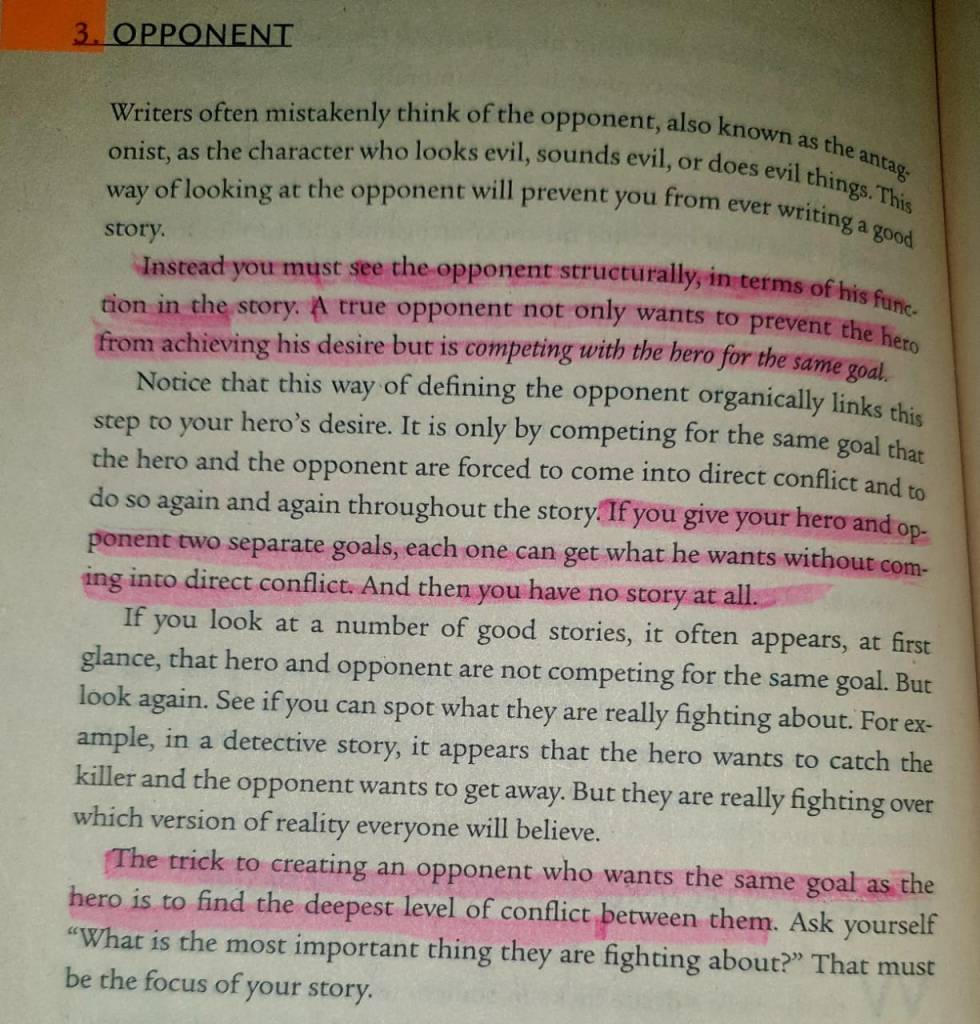
John Truby, “A true opponent not only wants to prevent the hero from achieving his desire but is competing with the hero for the same goal. If you give your hero and opponent two goals, each can get what he wants without direct conflict. And then you have no story at all. This is a mistake that will cause all kinds of structural problems.”
- Strong Motivation
A writer must create a believable reason for their black pieces’ actions. Their goals may clash with the protagonist’s, but they must believe they’re undeniably right. Their backstory must be so effective that it justifies their behaviour and decisions.
- Powerful Presence
A weak or easily defeated antagonist won’t create tension. They should be intelligent, skilled, or resourceful, often one step ahead of the hero to keep the audience engaged. Their presence must drive conflict and raise stakes throughout the story.
- Opposition to the protagonist’s Values
The antagonist should challenge the core beliefs or values of the protagonist. This creates thematic depth and forces the white pieces to grow or question their convictions.
- Human Flaws
The antagonists should seem like humans, not perfect. They also have insecurities, inner battles, and weaknesses. Their morals should be potent but with flaws. Structurally, the opponent has always been a key because your protagonist learns through their opponent.
These are some qualities from which writers work to enhance the presence of Black pieces.
Usually, in chess, both sides are equally attacked, but a writer as a black piece(antagonist) always makes the black piece more assertive for a gripping screenplay.
Now, let’s dig out some White Pieces facts.
White Pieces — The Writer as the Protagonistic Force
The audience already knows the protagonist will win in the end, but still, they choose to see the story; what is the reason that connects them with a story?
“How?”
This “how,” builds audience interest.
A protagonist’s journey to “how they will achieve their goals?” engages the audience. And, that “how” makes it crucial for writers to deeply structure their white pieces.
All brilliant movies hold the impact of ingenious writing.
Writers create white pieces that always appear less powerful in the beginning. They brainstorm all the possibilities so that their white piece solves the problem organically while maintaining their characteristics.
It is a character who follows a path to achieve their want, but the antagonist redesigns its path.
This character takes many moves that define its journey. It should be so precise that the story forward.
Why are White Pieces less powerful in the beginning?
In storytelling, especially screenwriting, we root for characters who struggle, fail, and grow. If the protagonist begins with all the knowledge, there’s no tension, which means no story.
The antagonist’s strength creates the obstacles that force the protagonist to evolve. The journey of overcoming those obstacles makes a story compelling and emotional.
So, the protagonist is often “less strong” — initially. But as the story progresses, they gain courage, clarity, and conviction. That’s what makes a hero unforgettable.
A writer should remember some essential qualities while designing their white pieces.
How can a writer build a strong white piece?
A well-written protagonist learns from failures. Every time the antagonist tries to hit them, they fight to seek the truth. They work on the inner self to build strength. They are always ready to sacrifice their comfort for growth. They challenge the antagonist, so a writer should focus on their white pieces with,

- Clear Goal or Desire
A strong protagonist knows what they want. Their journey toward this goal drives the plot. Desire should be specific.
- Values and Flaws
A compelling protagonist holds strong beliefs. Their values often get tested, and how they respond defines their heroism. Also, the audience connects more with characters who feel human. A great protagonist has flaws, fears, and doubts—but also the courage to overcome them.
- Growth and Transformation
A protagonist must evolve. The journey changes them—emotionally, mentally, or spiritually. Their arc makes the story meaningful. They must take action in the face of conflict, even if they are afraid. This courage makes them inspiring and drives the story forward.
- Make your lead character constantly fascinating.
John Truby said, “One of the best ways to grab and hold the audience’s attention is to make the character mysterious. Show the audience that the character is hiding something. This forces the passive audience members to reach out and actively participate in your story.
- The audience should empathize with the protagonist.
John Truby said, “To empathize with someone means to care about and understand him. That’s why the trick to keeping the audience’s interest in a character, even when the character is not likeable or is taking immoral actions, is to show the audience the hero’s motive.”
- Create both moral and psychological needs.
It is an effective quality that a writer should remember while creating the white pieces. It is clear that a psychological need only affects a person, but a moral one affects everyone. By giving this quality, a writer creates a character that increases the story’s emotional power.
The story truly comes alive when the connection between the hero and the opponent is revealed. Their conflict, past, or emotional tension creates powerful drama that hooks the audience. Once this relationship is clear, you’re ready to craft a masterpiece.
Don’t wait any longer—start creating your black-and-white pieces now!
I hope you’ll find this blog informative and helpful. You can share your feedback through comments and feedback forms. Your every word matters and helps us to improve.
Please feel free to share the next topic you would like to read about.
Stay connected, readers!











Leave a comment