Have you ever wondered how a perfect novel or a movie is paced so that it connects with the audience profoundly? How is every scene placed with perfect timing? What techniques do writers use before writing a magnum opus script?
If you’ve ever thought of it, this blog is for you. Great stories don’t happen by accident; they are built on a strong foundation. And that foundation is a Three-Act Structure.
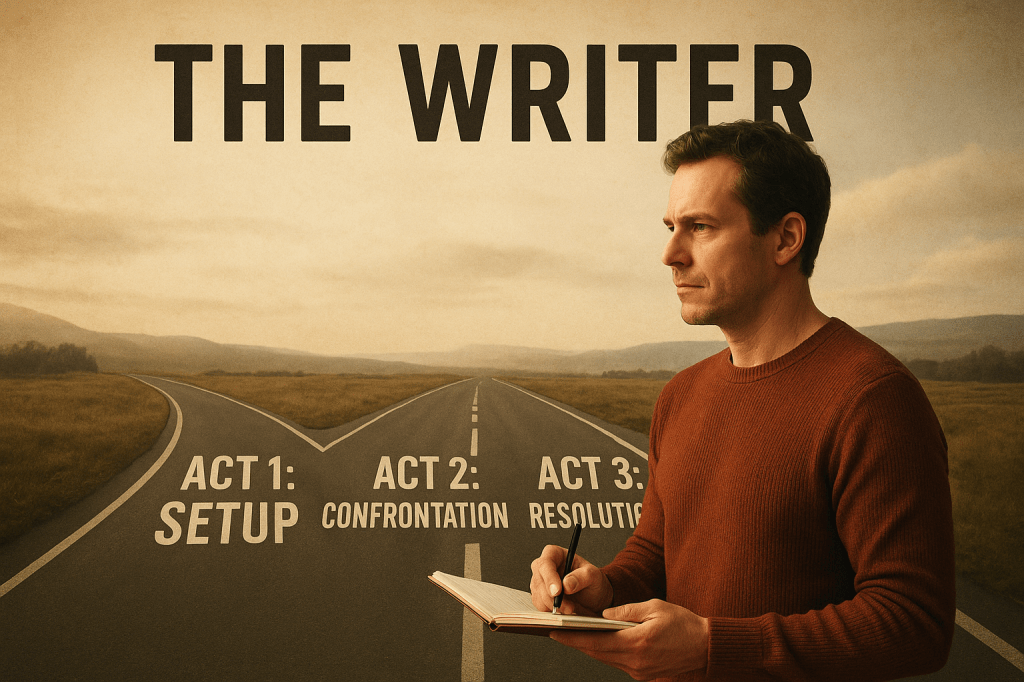
In storytelling, the three-act structure gives your narrative shape, direction, and emotional rhythm. It is a simple yet powerful framework used by screenwriters, novelists, and storytellers worldwide. This structure divides your narrative into three essential phases: Act 1: Setup, Act 2: Confrontation, and Act 3: Resolution. Without it, even the most brilliant ideas fall flat.
So, in this blog, we’ll break down the timeless Three-Act Structure. You’ll learn what the three-act structure is, how each act works, and how you can apply it to create stories that truly resonate.
Let’s dive into it.
What is Three-Act Structure
The Three-Act Structure is a timeless storytelling framework that divides a narrative into three major phases. The first phase is called setup, which is the beginning. The second phase is confrontation, which is the middle phase. And the third one is resolution, which is the end. The Three-Act Structure follows a 25-50-25 pattern: Act 1 covers 25% of the story, Act 2 takes 50%, and Act 3 completes the final 25%. It is the oldest and most reliable method that helps writers organise events naturally.
The three-act structure’s strength lies in its simplicity. It clears the pace of the script, which enhances its credibility. Also, that credibility makes the script more engaging and emotionally satisfying. That connects with the audience.
It is a universally accepted structure. Writers use this structure to balance their story. With it, every scene, dialogue, conflict, humour, setup, and climax gets its believable reason. The Three-Act Structure remains powerful across genres because it blends logic with emotion. Whether writing a screenplay, novel, short story, or audio drama, this structure strengthens storytelling.
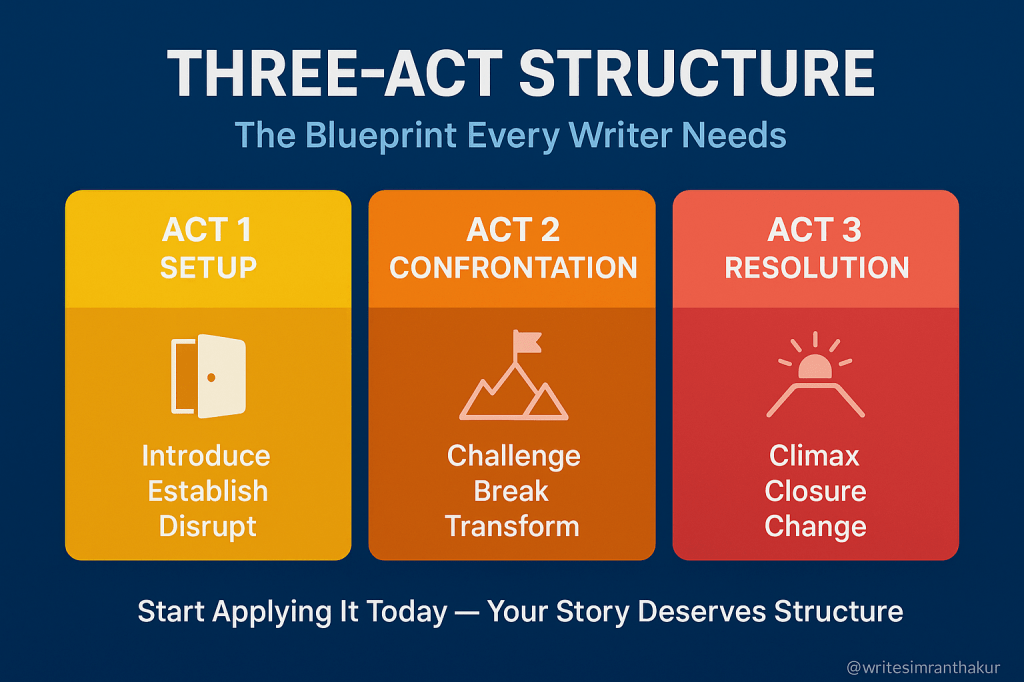
What is meant by ACT 1: Setup
The first ten minutes of a story are enough to connect the audience. This is where the audience enters the character’s world and understands the story. The first act should be logically aligned so that the beginning is strongly gripping.
The purpose of this act is to set up the tone, theme, pace and direction. It covers 25% of the entire script, which means around 25-30 pages. It is highly essential to present the inciting incident. After the inciting event, Act 1 leads toward the commitment moment. This is where the protagonist, consciously or unconsciously, chooses to embark on a new journey.
These details create empathy and connection. If the audience doesn’t understand the protagonist, they won’t appreciate who they become at the end. Whether the protagonist is a queen, a student, a soldier, or an underdog, their normal world becomes a reference point for everything that follows.
Why matters:
- It introduces the protagonist in an engaging way.
- Establishes the character’s world, status quo, and emotional state.
- Reveals the flaw, wound, or lack that will shape their journey.
- Sets the tone, genre, and rules of the story’s universe.
- To make the audience care enough to follow the character into Act 2.
Examples:
- Harry Potter: Harry receives his Hogwarts letter, which breaks his miserable routine and pulls him into a magical world.
- The Lion King: Simba loses Mufasa, which shatters his belief system and pushes him into exile.
- Queen: Rani is abandoned before her wedding. This incident triggers a journey of independence and self-discovery.
Whether the story is dramatic, comedic, thriller-like, romantic, or fantastical must be clear from the beginning. At the end of Act 1, the character makes a clear decision, even if they are forced to step back. It must include a strong hook that pushes the character towards Act 2.
What is meant by ACT 2: Confrontation
Act 2 covers half of the story. It takes 50% of the script and approximately 50-60 pages. If Act 1 introduces the character, Act 2 breaks them open.
It is long and stretched, where the character’s journey becomes harder and more personal. In this act, writers intentionally place their hero in situations that challenge them until they have no choice but to evolve. Their growth shows through higher conflict, stakes, failure, discovery, and revelation. After that, the protagonists set out on a journey with a clear goal.
Why do we call it confrontation? Because, here, every step forward should trigger a new complication. Every small victory must create a bigger consequence. The obstacles in this act are not random; they are designed to expose weaknesses and reveal internal fractures of the protagonist.
These obstacles are of different types.
- External Obstacles are the protagonist’s surroundings, including villains, failures, environment, social pressures, or physical challenges. These obstacles challenge the protagonists and try to resist their transformation.
- Internal Obstacles are a character’s fears, trauma, beliefs, hatred and betrayal. These inner conflicts prevent the characters from evolving.
In Act 2, as the story progresses, the obstacles must grow harsher. The protagonist should feel increasingly cornered. Their old identity begins to fail them. It deepens the Character Arc, where old beliefs begin to crack. The protagonist questions their identity, purpose, relationships, or ability to win.
Why matters:
- Challenges the protagonist at every level.
- Strengthen antagonistic forces.
- Exposes the weaknesses, fears, and limitations.
- Creates emotional stakes that build toward transformation.
- Leads the protagonist into the all is lost moment.
Examples:
- Rocky: Rocky trains, fails, improves, and confronts his own fear and self-worth.
- Queen: Rani gains confidence as she travels alone, learns independence, and discovers her identity.
- Chak De India: Kabir Khan struggles to unite a divided team. He faces prejudice and resistance as he pushes them to grow.
By the end of Act 2, the hero reaches the “All Is Lost” moment. It is the darkest emotional point where everything collapses. But this collapse is essential; it destroys their old self and prepares them to rise with courage and a renewed purpose for Act 3.
What is meant by ACT 3: Resolution/Climax
Act 3(climax) is simple yet profound. It fulfils the promises made in Acts 1 and 2. Every great Act 3 begins with the protagonist’s final attempt to achieve their goal. This attempt is different from all earlier efforts because:
- It comes after the “All Is Lost” breakdown.
- It is fueled by inner transformation.
- It requires bravery instead of desperation.
- It demands that they let go of the old self.
In this act, the protagonist finally becomes the person they were meant to be. Whether they get what they want or not, their surroundings or they evolve entirely. This is the act of transformation and destiny.
The resolution part takes 25% of the story, which means 25-30 pages. Here, both protagonist and antagonist push their limits. The story resolves subplots: relationships, mysteries, promises, conflicts, or emotional threads. The audience leaves with a sense of completion.
Act 3 is not a place to introduce new conflicts; it is where you resolve and reward the audience’s emotional investment. The resolution must honour the emotional truth of the journey. It is the highest emotional and narrative point of the entire story, which is unforgettable. Because the ending defines the entire experience.
Why Matters:
- A strong Act 3 turns a good story into a great one; a weak Act 3 collapses the entire narrative.
- It shows clear character arcs or characters’ transformation.
- A strong resolution leaves viewers fulfilled and emotionally connected to the story.
- Act 3 holds the highest peak of tension. It delivers the unforgettable moments.
- It turns the entire journey into a meaningful conclusion.
Example:
- Avengers: Endgame: The final battle where the heroes fight Thanos.
Climax: Tony’s ultimate sacrifice shows the completion of his character arc.
- Queen: Rani returns home with dignity, strength, and independence.
Climax: She doesn’t get the WANT (marriage), but gets the NEED (self-worth).
- 3 Idiots: Rancho’s true identity comes out, giving emotional closure to Farhan and Raju.
Climax: The story comes full circle with friendship and purpose.
At the end of Act 3, the story reaches its final emotional closure. All major conflicts are resolved, the theme becomes fully visible, and every important subplot is tied up. This closing moment is where your story becomes worthy. All efforts get meaning, and meaning transforms into memory. This is the moment your story earns its place in the audience’s heart.
Tips for Writers
Crafting a Three-Act Structure is one of the most delicate skills a writer must master. Here are some essential tips to help writers create a strong three-act structure that resonates with readers/viewers long after the story ends.
- Opening in Act 1 should instantly pull readers into the character’s world and spark curiosity. Writers must focus here.
- Show the character’s routine, flaws, fears, desires, and worldview so the audience connects before the journey begins.
- Introduce a disruption that forces the protagonist to choose change over comfort.
- Make conflicts tougher and more layered.
- Add a revelation or twist that shifts the character’s direction.
- Break the protagonist emotionally or physically so their final rise feels earned.
- Tie up subplots, promises, setups, and emotional arcs laid earlier across all three acts.
- Let the final choices and consequences reflect the story’s moral truth without preaching.
- Your closing visual or emotional moment should mirror the opening and transformation.
Final Words
The Three-Act Structure isn’t a boundary; it’s a creative guide that empowers writers to write with confidence. It gives direction and emotional impact that a writer needs.
So, don’t wait. Start applying the Three-Act Structure today and watch your storytelling transform!
Now, it’s your turn, writers!
I’d love to know how these insights helped you. Share your thoughts or your writing experience in the comments. Also, don’t forget to share your feedback. Your every word matters to us.
And if this guide inspired you, share it with your fellow writers, writing groups, or creative community so they can grow with you.
Just believe in your words. Just believe in your story!
Simran Thakur
Founder AFAWW
Audio Story Scriptwriter| Author| Screenwriter| Blogger| Poet













Leave a comment