
Let’s start this blog with some simple questions.
What will you feel if everything you have seen, listened to, or read in the story is an illusion? Suddenly, you realised in the middle of the story that you had cheated yet? What if the truth was always present, but you never saw it?
You will be surprised, right?
I know, yes. This is the brilliance of the misdirection technique. These kinds of illusions are not placed by fault. Writers carefully use this technique to create an illusion.
Narrative misdirection is a strong element that helps fill the storytelling with suspense and twists for engagement. Once the audience is hooked in a misdirection loop, their curiosity to find the truth grips them till the end.
Using this technique, writers lead audiences towards one conclusion while quietly preparing another in deep layers. It is a very controlled, informative, and perspective-based technique that is strategically placed to look and feel natural.
Now, you will surely comprehend the necessity of the narrative misdirection in storytelling. If you still have doubts or are eager to learn more about this technique, read this blog.
In this blog, we will talk about what narrative misdirection is. How does it work? Core Techniques of Misdirection. And how to apply misdirection effectively in storytelling.
So, writers! Don’t wait any longer. Just dive into it.
What is Narrative Misdirection?
Narrative misdirection is a storytelling technique in which a writer cleverly guides the audience towards a specific assumption while hiding the key information in deep layers. It is a controlled perception, where every fact, action and emotion seems complete to the audience, but actually are not. They hold another perspective that writers hide for later revelation.
The narrative misdirection forms in a logical, credible, and natural way that can win audience trust. And makes the version their truth, until the story reveals otherwise.
A skilled writer uses this tendency to their advantage. Instead of presenting wrong information, they present incomplete information that looks complete. It prepares the audience for the suspenseful moments. And when the truth is finally revealed, the reaction turns into realisation.
Narrative misdirection technique is widely used in thrillers, mysteries, and even dramas. Writers use it to add suspense, curiosity and a different perspective in the narrative. It is a deeply layered technique that needs time and effort to look natural in storytelling.
For example, a character in your story appears trustworthy, helpful and kind, but his every action and word hides a deeper meaning. Those small misdirections hide his darker intentions.
The key to strong misdirection is in fairness. You must leave clues, but in a most brilliant and suspenseful way. Ultimately, narrative misdirection is a strong storytelling technique that adds depth in long writing formats, including authoring, audio stories and screenwriting. Writers use creative freedom to create unexpected twists while maintaining the audience’s trust and immersive storytelling.
Why Misdirection Works in Every Storytelling Format
To understand why misdirection is so powerful, you need to understand how audiences think. Humans are pattern-seeking by nature. When we read or watch a story, we are constantly analysing and connecting dots. Readers/viewers/listeners are constantly trying to stay one step ahead of the narrative. This instinct is what makes misdirection so effective.
Understanding it, writers use the information so that the audience immediately makes sense of it. And here, once an expectation is formed, the mind tends to defend it.
This is where misdirection becomes effective. By showing selective truths, writers encourage the audience to form a specific interpretation. And because the audience arrives at that stage, they trust it more deeply.
There are many facts that make the misdirection technique effective in storytelling.
- Misdirections work because partial but strategically placed information forces audiences to make their own assumptions. And the conclusion shocks them. That event becomes more real and impactful.
- It makes the audience active participants in the story. Their curiosity keeps them emotionally and mentally invested.
- It can be used in multiple ways. Either through different perspectives, information(dialogue, setup, etc) or character sketches(behaviour, emotions and all).
- Misdirection ensures that twists don’t feel random or forced. Every clue or breadcrumb throughout the story should have a specific reason. That helps the audience to go on a journey with your narrative.
- Whether it is a film, novel, short story, or audio narrative, misdirection adapts easily. Every format relies on controlling information and perspective.
Some Core Techniques of Misdirection
Basically, viewers/readers/listeners don’t enjoy being fooled; they enjoy discovering truth in an unexpected way. Misdirection here gives those unexpected turns. However, misdirection comes with a risk. If overused or poorly executed, it can break trust. So, writers should remember the controlled narrative.
There are numerous ways to add narrative misdirection in a story. I have described some below to share the idea you can use in your narrative.
a. Perspective Misdirection
One of the most effective ways to mislead the audience is to limit their perspective. Writers use misdirection here to tell a story through a specific character’s point of view. This POV creates comfort for the audience, and they believe in what the character knows. If the character misunderstands a situation, the audience does too. This creates a natural form of misdirection.
b. Informative Misdirection
Misdirection is also a game of perfect timing. It works best when writers clearly know what they choose to reveal and when. Here, instead of removing important details, skilled writers delay them. They provide all the information strategically to form conclusions, but not enough to see the entire picture. This creates a sense of clarity that is, in fact, incomplete.
In this situation, the audience comprehends the scene based on visuals/words/audio. Later, when the missing context is revealed, their understanding shifts, and they are surprised. It is a power of perfect timing.
c. Emotional Misdirection
Emotions can become the most misleading element in any storytelling. Writers build a specific emotional tone to guide the audience. In that moment, the audience feels immersed in a scene, but later, a minor twist in emotions can turn the whole situation in a second.
Imagine a scene where everything feels resolved. The characters are happy, and the atmosphere is calm. The audience is satisfied with the outcome. Then, suddenly, a new truth as a powerful emotion emerges that changes everything. This shift in emotions can become a bigger revelation in the story.
d. Attention Diversion (Red Herrings)
Sometimes, the best way to hide the truth is to give the audience something else to focus on. Red herrings are distracting elements that seem important but are ultimately misleading. Every clue used in a red herring misleads the audience and draws attention away from the fact.
However, red herrings must be handled carefully. They should feel like a natural part of the story. Otherwise, it can create confusion.
How Writers Can Apply the Misdirection Technique Effectively in Their Story
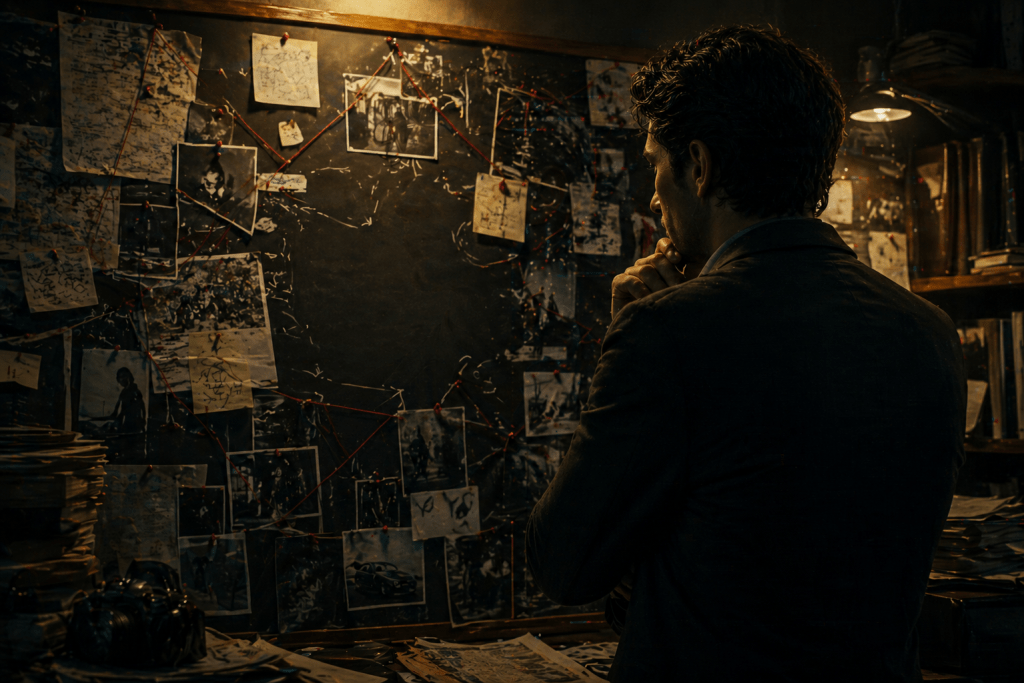
To use narrative misdirection in a story, writers need a clear process in mind. Remember that misdirection is not about confusing your audience; it is about guiding them towards a false reality with precision.
Below, I have shared some practical ways to apply the narrative misdirection technique with clarity and impact. Learn to turn your story into the most worthy and suspenseful experience.
1. Start with the absolute truth of your story
Before you mislead your audience, you must know the actual reality of your story. What really happened? What is the hidden motive? What is the final reveal?
Without this clarity, misdirection becomes burdened. It will fail to connect the dots in the end. To save yourself from this issue, design the entire story beforehand. This prework helps to establish everything in the story as logical and natural. It helps you design clues and emotions as per the requirements of the scene.
2. Ensures that the audience will believe false information
Misdirection works best when you design for what the audience should believe. This becomes the strongest illusion you create. You can use characters, dialogue, or a setup to build this belief. It should be so powerful and precisely defined that the audience is forced to accept the conclusion.
Once the audience’s belief becomes stronger, a changing revelation creates a lasting impact. Remember that without a clear false belief, your misdirection lacks direction. You are here, shaping perception step by step, not only showing scenes to complete a story.
3. Control the flow of information
What you reveal and when defines the success of misdirection. Avoid showing results too early. Instead, provide partial information that feels complete, but actually is not. Let your audience connect the dots themselves.
Delay crucial details for the right moment. This creates tension and curiosity. However, never try to remove information unfairly. When the truth is revealed, they should feel that the clues were always present in the story.
4. Use limited Point of View
A limited perspective is one of the easiest ways to create misdirection. When a story is told through a specific character, the audience only sees what that character sees. This makes misdirection feel natural rather than forced.
Here, strategically, you are not hiding the truth; you are just covering it for later revelation. This technique works well in first-person perspective, where internal thoughts shape the reader’s understanding.
5. Build Trust Before Breaking It
Build the illusion smartly, then choose the right moment to break it. It is a control on timing. This reveal should come when the audience feels most confident in their belief.
Writers can use this belief through characters and tone. Once the narrative is set finely, a small change can shift their understanding. Writers keep in mind that breaking trust doesn’t mean betraying the audience. You can’t fool intelligent people. It means challenging their expectations in a way that feels meaningful and justified.
6. Use Emotional Misdirection
Emotions and expressions are the most powerful narrative misdirections in storytelling. Writers can show a blissful expression in the beginning to create a happy atmosphere. But! At another moment, the same person can change the situation with another expression. They can intensify the atmosphere, prompt the audience to rethink, or shift the entire tone. This is the power of emotional misdirection.
Always remember the scene in Baahubali 2 when Rajmata Shivagami offers Bhallaladeva a palace, soldiers, and weapons. In the beginning, Bhallaladeva smiles and calmly refuses, but just a few steps later, his emotions shift, and you sense his desire for revenge.
Final Words
Narrative misdirection is about how convincingly you engage your audience by presenting wrong facts. It is all about timing, psychological intelligence, and smartly placed clues. Once writers learn to add this technique effectively, it transforms a simple story into an experience. So, be an action-taker! Take a step to learn and add misdirection in your story.
A most suspenseful narrative is waiting for you.
Now it’s your turn, writers!
Have you ever used misdirection in your writing? Or experienced a twist that completely changed your perspective on a story? Share your thoughts in comments.
Also, if this blog helped you to understand storytelling deeply, don’t keep it to yourself. Please share this with fellow writers and storytellers who want to add more depth to their writing.
And don’t forget to share your feedback. Every word matters to us.
Simran Thakur
Founder and CEO, AFAWW
Author| Audio story scriptwriter| Screenwriter| Blogger| Poet
















Leave a comment