More than two decades have passed since “Here Pheri” was released, but the character, Babu Rao, still echoes in my mind. How beautifully it was written.
Characters are essential to any storytelling format. They keep the audience hooked through emotions, actions and dialogue. There are many characters people love. They are evergreen and created beautifully. Harry Potter, all Marvel superheroes, Sherlock Holmes, Rani(Queen), Jitu Bhaiya, Munna, and more. The list is endless. But why are these characters loved so much?
Do you ever think about how characters are created? How do they transform throughout the journey? How does each character connect with other characters?
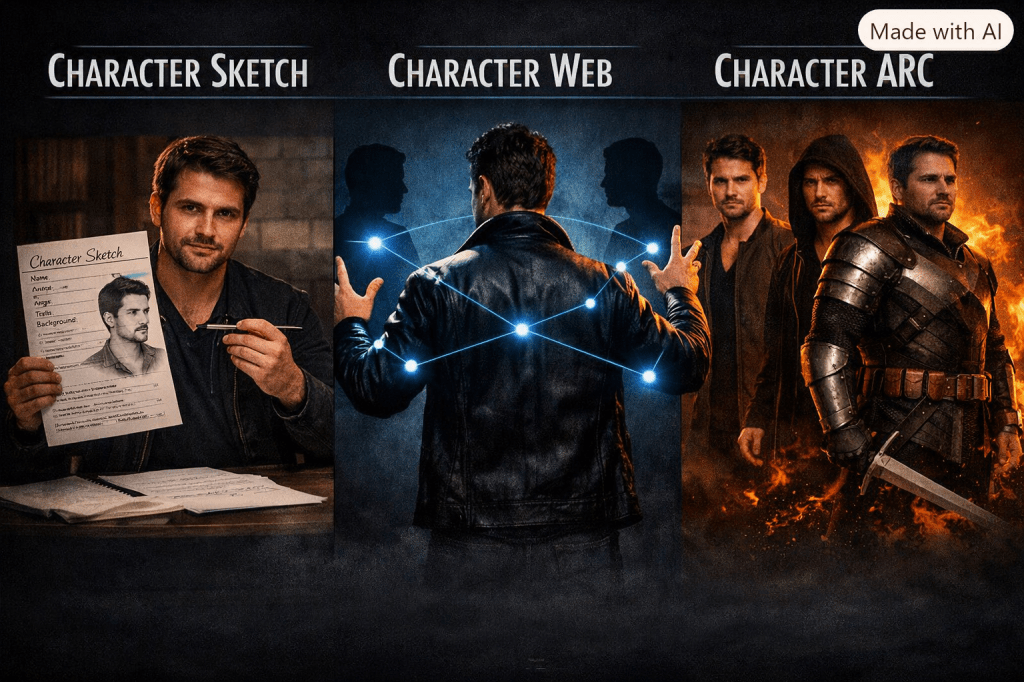
Some terms writers use to create credible, attractive and real characters. These terms are Character sketch, character arc, and character web.
Many beginner writers remain confused between these terms. They struggle to find the differences among them. As a result, characters feel flat and forgettable.
This is where the need for these three powerful terms increases. Today, in this blog, I’ll thoroughly describe character sketch, character web and character arc. I’ll cover their definition, types, and how they improve stories and help you create credible, emotionally engaging characters.
Let’s dive into it.
First, What is Character Development?
Character development is the process of creating believable and emotionally engaging characters. Here, every character is precisely written because they drive the story forward. In this process, writers prioritise characters’ personalities, choices, goals, relationships, values, and transformations because all matter to the story.
During character development, writers work on each character’s depth. This is a very detailed process. Characters’ age, physical appearance, morals, beliefs, strengths, weaknesses, language, name- every detail is included in this process. In fact, each character’s relationships with other characters(character web) are also an essential part of character development.
Character development is a need of every storytelling format (Novel, Audio, & Screenplay). Every format’s audience engages more when characters struggle and find ways to overcome obstacles. It is not only about a powerful protagonist. Every character, be it a hero, antagonist, or supporting character, matters to a story. They deserve a finely written character sketch.
Character development is not an easy task. Each character has a unique sketch, transformation journey and relationships with other characters. Each element is equally important and should be clearly visible throughout the story.
What Is a Character Sketch?
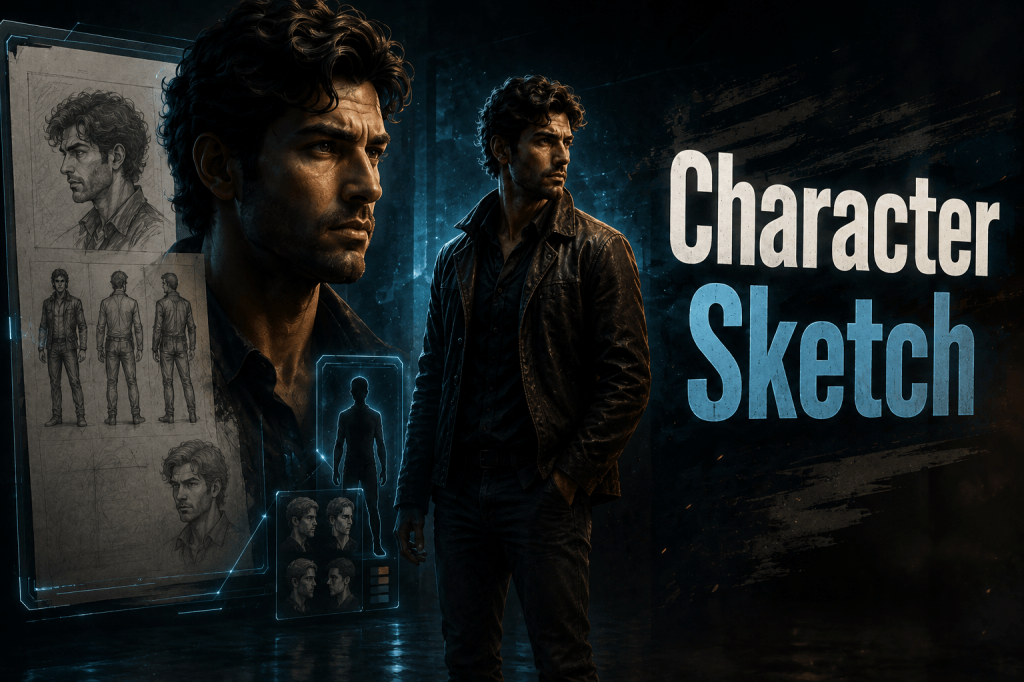
A character sketch is a detailed profile of a character that includes name, age, appearance, personality, strengths, weaknesses, goals, fears, values, wounds, obstacles, occupation, background, habits, backstory, language, transformation, relationships, and more. It is like a blueprint created by a writer and followed by the character.
A character sketch is important because it makes the fictional characters real and credible. It helps actors act consistently throughout the narrative. In fact, characters’ psychological and external dilemmas can be a part of the character sketch if required. These elements help to understand why a character behaves in certain ways.
It is also a necessary element for character transformation and the character web. How a character changes throughout the narrative through their decisions, actions or journey is all described in the character sketch. Their learning becomes a lesson for the audience. Also, every relationship the character shares with other characters is included.
These three are not separate terms, but interlinked and complete each other. Together they become the most valuable tools in the character development process.
How Character Sketches Improve Stories
- Gives characters real and natural personalities, goals, flaws, and relationships.
- Helps remember how characters behave, speak, and react throughout the story.
- Allows writers to create deeper emotional connections between characters and the audience.
- Establishes the starting point from which writers can develop meaningful emotional, psychological, or moral transformation for characters.
- Helps in understanding different characters before creating scenes.
What Is a Character Web?
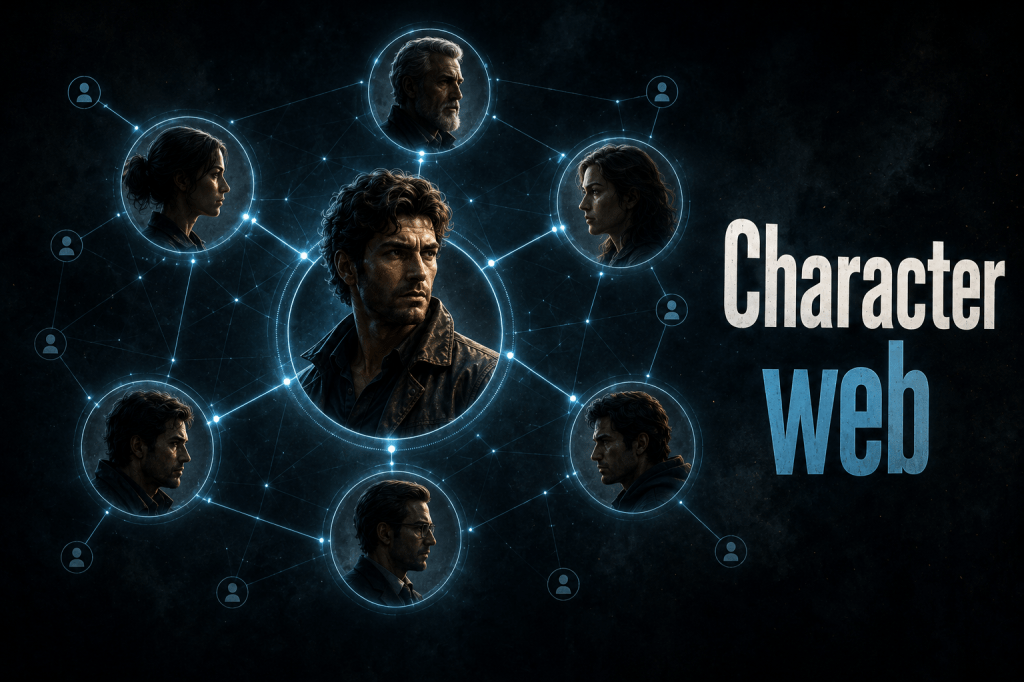
A character web is a visual or written map that shows the relationships between the main characters and the other characters in a story. Writers create this web strategically after deep brainstorming.
A character web helps to establish natural, real and authentic connections between characters. It highlights how each character influences, supports, challenges, or conflicts with others. It assists writers with the emotional and narrative connections that drive the plot. Ensures that every relationship has a meaningful purpose.
You have seen in every movie that no character exists in isolation. A well-designed character web reveals how interactions between characters shape their decisions that affect their personal growth.
It typically begins with the protagonist at the centre. From there, lines connect the protagonist to other supporting characters, such as family, friends, antagonists, and allies. Each connection represents a specific type of relationship, such as trust, rivalry, romance, or more.
Writers also indicate how these relationships evolve throughout the story. That makes it easier to identify emotional arcs.
How Character Webs Improve Stories
- Prevents unnecessary or underdeveloped characters from appearing in the story.
- Naturally generates conflicts by connecting characters with opposing goals, beliefs, personalities, or interests.
- Strengthens subplots by explaining each character’s role and a natural connection with others.
- Mapping relationships helps maintain consistent interactions and emotional responses from beginning to end.
- Shows how a character’s emotional development and overall transformation are also based on other characters.
What Is a Character Arc?
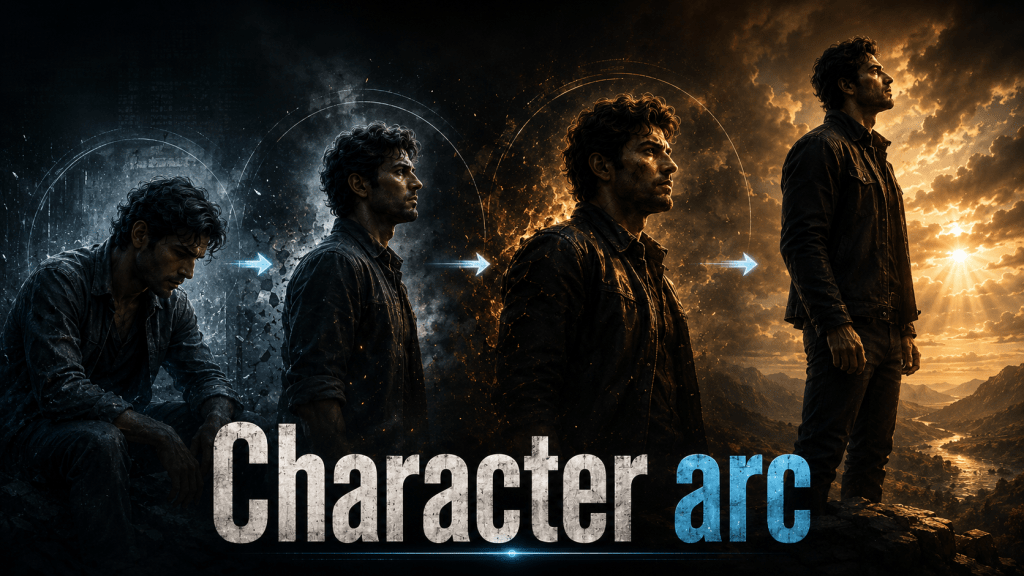
A character arc is the emotional, psychological, or moral transformation a character experiences throughout a story. It represents the journey from who the character was at the beginning to who they become by the end. This complete transformation is driven by the challenges, conflicts, and decisions the character makes throughout the narrative.
Every character follows a different character arc. It is based on the story’s needs and narrative. That is why it is also one of the most important parts of the entire character development process.
A character arc is a need of every story because it makes characters feel real and credible. In real life, people learn from experiences. They overcome weaknesses and evolve after facing obstacles and harsh experiences. If a character also suffers in the story, faces conflicts and obstacles and then evolves, that connects with the audience more.
Always remember that a character arc is not about changing a character’s circumstances, such as a character becoming wealthy or achieving a goal. It is not as simple as that.
Every element of a character sketch can be responsible for overall transformation. Be it connections, conversations, backstory, background or anything else. You can’t skip any element to comfort yourself. Any experience can be the reason for final internal change.
Types of Character Arcs.
Characters breathe life into stories, but it is their arcs that make them unforgettable. A character arc maps the transformation of beliefs, flaws, and strengths as they face challenges. Whether they rise, fall, or remain unshaken, their journey reflects the heart of storytelling itself.
1. Positive Change Arc
In this arc, the character begins with weaknesses or misconceptions. Through conflicts, challenges, and relationships, they shed false beliefs and discover inner strength. Their transformation reflects courage, selflessness, or acceptance. It shows a positive transformation, which is why it is one of the most inspiring arcs. The audience connects more with a positive arc because it conveys a positive message and a sense of fulfilment.
Example:
- Queen (Rani) changes from a shy, dependent girl to an independent, confident woman.
- Simba in The Lion King evolves from a frightened cub into a courageous king.
2. Negative Change Arc
This arc reveals the fragility of human nature. The character may start with good intentions but is consumed by greed, pride, fear, or obsession. It describes how false beliefs can unravel lives and become a cautionary tale. Their fall often serves as a warning to the audience.
By the end of the story, after experiencing tragedy or downfall, a character become a dangerous, negative person. Negative arcs are frequently found in crime, psychological thrillers, and tragic dramas.
Example:
- Devdas in Devdas changes from a hopeful lover to a self-destructive alcoholic.
- Arthur Fleck in Joker, a vulnerable, isolated man, gradually descends into violence and embraces his darker identity.
3. Flat (Static) Arc
The flat arc is the path of constancy. The character already knows the truth and doesn’t need personal transformation. They remain true to their beliefs, values, or principles despite the challenges they face. Their role is to challenge lies, resist corruption, and guide others.
In this arc, the character itself doesn’t undergo a bigger inner change but influences and transforms the world around them.
Example:
- In Bajrangi Bhaijaan, Pawan’s faith in love and humanity remains unchanged, but he transforms others.
- In Lagaan, Bhuvan’s unwavering optimism leads villagers to victory.
How Character Arcs Improve Stories
- Shows how obstacles, conflicts and stakes transform a character and add realism to their journey.
- Connects personal transformation with major story events that make the plot feel purposeful.
- Readers become more invested when they discover a character will overcome their fears, flaws, or inner conflicts.
- Also conveys the central theme of a story. Conveys the message that the audience comes to experience. Sometimes changes the world around.
- Makes characters memorable. Audiences reflect on their own experiences, choices, relationships, and personal growth after finishing the story.
Final Words!
Creating memorable characters is one of the most important aspects of storytelling. Readers connect with characters who feel authentic, relatable, and capable of growth.
Before you start writing your next story, take the time to create a detailed character sketch, character web, and character arc. Investing time in these storytelling elements will help you write stronger characters.
Now, it is your turn, writers!
I’d like to hear your thoughts! Share your experience with character creation or your favourite character development technique in the comments below.
Also, if you found this blog helpful, please share it with fellow storytellers who might need it more.
And don’t forget to share your feedback. Your every word matters to us and helps us create better writing content and community.
Happy writing!
Simran Thakur
Founder & CEO, AFAWW
Author| Audio story scriptwriter| Screenwriter| Blogger| Poet
















Leave a comment