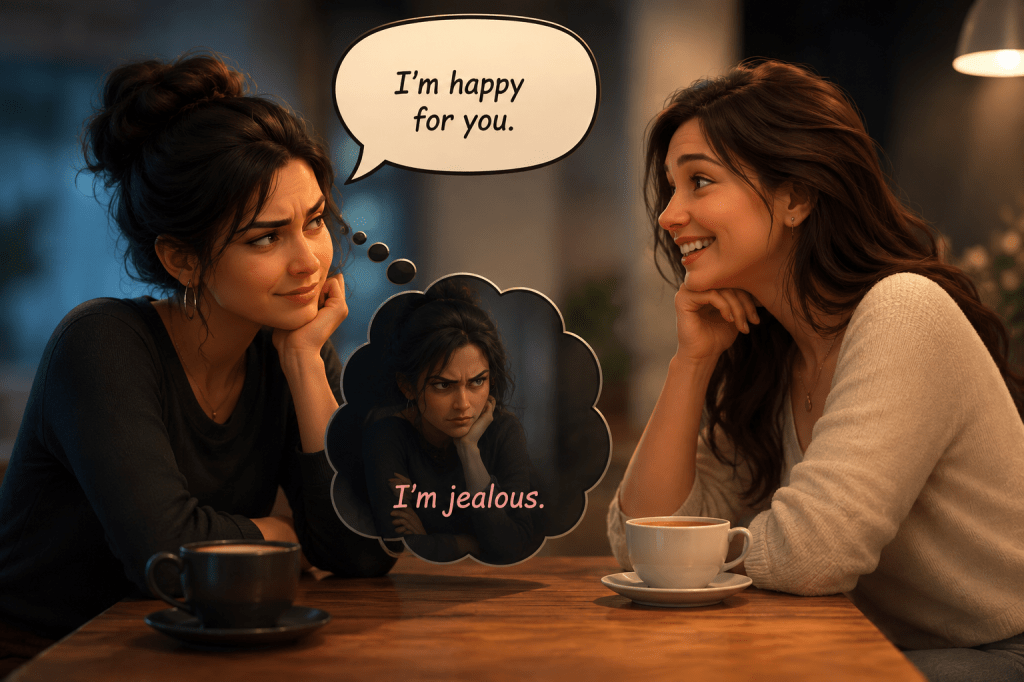
Okay, tell me, does “I am fine” always mean “I am fine”?
Is something more hidden behind these simple words?
If I add shivering hands, a forced smile, a sad face or silence after “I am fine,” will they affect the meaning of “I am fine”?
Absolutely, yes! This hidden layer of meaning is subtext.
Subtext is one of the most powerful storytelling techniques writers use. By adding expressions, tone and actions to some words, writers completely change their meaning. This technique reveals the factual intentions behind words. It is one of the most effective techniques to create suspense and curiosity.
You have seen many movies where characters say “I don’t need anyone,” “I’m happy for you,” “I wish you get everything,” “I don’t love you”, “I care for you”, but their actions, tone or expressions reveal something else. Something completely different from their words. And here, subtext works.
Subtext is widely used in novels, screenplays, microdramas, audio stories, or even short stories. That is why I’m here with my new blog.
In this blog, I’ll discuss everything you need to know about subtext. It includes what subtext is, why it matters in storytelling, types of subtext, and how to use this technique effectively in different storytelling elements.
Let’s dive into it.
What Is Subtext in Storytelling?
Subtext in storytelling is the hidden meaning beneath the words characters use to converse. It is what a character truly thinks, feels, wants or means, but does not freely express.
Subtext allows writers to hide suspense in every word. These words enhance curiosity because the audience can feel something fishy behind them. They become curious to know the reason. This sudden change is so powerful that it diverts the narrative in a second.
Let’s take an example from the movie Bahubali 2.
There is a scene in Bahubali 2 where Shivagami, the mother of Bhallal Dev, offers Bhallal a Palace, soldiers and a bow after being defeated by Bahubali. There, Bhallal smiles and politely holds her hands.
Bhallal: Singhasan na milne ka shok manaye, itna gira hua nahi hai apka beta. Rajmata Shivgami Devi ki agya sir ankhon par.
Then Bhallal moves. His smile slowly fades. Hand muscles tighten. Face turns angry.
This small change in action and expressions completely changes the meaning of those words. That was just subtext that hides his jealousy and hatred for Bahubali.
This one moment in the movie grips the audience’s attention. Everyone was curious about Bhallal Dev’s next move.
It is the real advantage of using subtext. It is used by the protagonist, antagonist or other supporting characters. It can show both positive and negative feelings. This is the real impact of saying more without saying it.
Subtext makes scenes more natural because in real life people rarely express every thought or emotion directly. They find it easier to hide their real feelings behind some casual words. That is why the audience feels more connected with subtext.
Why Does Subtext Matter in Storytelling?
A simple change in expressions, actions or tone can change the whole narrative. You can see it in many stories where characters actually feel hatred, jealousy, tiredness, or guilt, but they use words like “I’m okay,” “We are best friends,” “I trust you,” and so on. These words show they are okay, but they are not, because their body language reveals everything. This hidden truth enhances the need for subtext in storytelling.
Some more reasons to use subtext are:
- Allows dialogue to carry a deeper meaning.
- Makes characters more realistic. People rarely feel comfortable sharing their real feelings in words. Subtext reflects this reality.
- Encourages viewers or readers to find hidden meaning in characters’ words and actions. This curiosity makes the audience active participants.
- Reveals hidden attraction, resentment, love, jealousy, fear, or mistrust between characters.
- Add layers. A simple conversation at a dining table can be about dinner while actually being about a failing marriage.
- Reveals character more. Their actions, tone or words can reveal personality more effectively than direct exposition.
What Are the Different Types of Subtext in Storytelling?
Subtext can appear in many forms. It can exist in dialogue, behaviour, emotions, silence, and even the setting of a scene. Understanding different types of subtext helps writers create stories that feel real and meaningful.
1. Emotional Subtext
Emotional subtext is the feeling a character hides behind their words. A character may say they are fine, but their expression, tone, or behaviour shows sadness, anger, or fear. It shows real emotions without directly explaining them.
2. Psychological Subtext
Psychological subtext shows a character’s hidden thoughts, fears, desires, and motivations. You have often seen a character behave confidently in a story but secretly feel inferior. They hide pain or guilt inside that affects them psychologically. This type of subtext makes characters more complex.
3. Relational Subtext
Relational subtext exists in conversations between two characters. For example, if two lovers discuss something ordinary while actually avoiding their relationship problems. Their words sound polite, but their tone and expressions reveal attraction, resentment, or distrust.
4. Social Subtext
Social subtext reflects the social expectations, rules, traditions, or power structures. A character may speak respectfully to someone because of their position, but they actually disagree with them.
5. Conflict Subtext
Conflict subtext exists when characters hide the real disagreement under a normal conversation. They discuss work, money, or relationships but are actually angry about betrayal or broken trust. Their tone reveals the conflict they refuse to address directly.
How to Write Subtext Effectively in a Story.

Subtext revolves around characters. How they behave, express and use words matters. To write subtext effectively, it is essential to know your characters.
1. Know What Your Character Really Wants
Before writing a scene or dialogue, understand your character’s goal. What do they want to achieve from this conversation? Do they aim to hide something? Do they reveal? Or do they apologise?
Their words can sound opposite of what they actually desire. They ask for an apology, but secretly want love or anything else. Knowing this hidden desire helps you create a meaningful scene with emotional subtext.
2. Give Characters Hidden Motivations
Characters should have reasons for their behaviour. A character helps someone because they genuinely care, or because they want something in return. Hidden motivations make characters unpredictable and layered.
3. Let Actions Contradict Words
A powerful way to create subtext is to make a character’s actions contradict their dialogue. Suppose a character says, “I don’t care about you,” but secretly keeps their partner’s photograph. Here, words communicate one thing, but the action reveals another.
4. Use Implication Instead of Explanation
Don’t make characters explain every emotion, thought, or intention. Allow their words, expressions, pauses, and behaviour to suggest what they really mean. In screenwriting, subtext has the greatest advantage because the writer can use expressions, actions, and settings more profoundly.
5. Leave Something Unsaid
Sometimes the most powerful part of a scene is what characters choose not to say. Silence, hesitation, or unfinished sentences can communicate powerful emotions.
6. Don’t Force Subtext into Every Line.
Subtext works best when it appears naturally. Not every conversation needs a hidden meaning. Some dialogue should provide information, move the story forward, or reveal character. Use subtext where emotions, conflict, or unspoken intentions genuinely exist.
7. Trust your audience.
Give the audience enough clues to understand what characters are feeling. Allow audiences to decode these themselves. It engages readers more.
Tips to Use Subtext in Different Storytelling Elements
1. Tips to Use Subtext in Dialogue.
Dialogue is one of the best places to use subtext.
- Don’t let characters say exactly what they feel.
- Use indirect answers. Avoidance itself becomes meaningful.
- Use pauses, stutter and silence to communicate. A simple pause in conversation can immediately show fear, hesitation or uncertainty.
- Use questions instead of statements. Rest your actions and expressions will work.
- Don’t explain every hidden meaning. Give readers enough clues to understand what is happening.
Example: Instead of “I’m jealous of your success.”
Try: Must be nice to have everything work out for you.
The second line carries resentment without announcing it.
2. Tips to Create Subtext Through Character Actions
Subtext isn’t limited to dialogue. Adding actions and emotions to dialogue enhances the depth of subtext.
- Create contradictions between words and actions.
- Use body language crossed arms, avoiding eye contact, forced smiles, or clenched fists- can provide another layer of meaning.
- Repeating specific behaviours can reveal patterns, emotions, or unresolved issues.
- Characters may touch, hide, break, or protect objects reflecting their emotions.
- Use actions to hide intentions. Characters can perform ordinary tasks while secretly planning something else.
Example: Imagine a woman saying: “I hope you have a good life.” Then she quietly removes his photograph from the wall. The dialogue suggests acceptance. The action suggests heartbreak.
3. Tips to Create Subtext through Silence
Silence can be one of the strongest forms of communication. It can create subtext through a pause, hesitation, refusing to respond, looking away and more.
- Make silence uncomfortable. An awkward silence can reveal tension between characters.
- Let silence replace answers. Avoiding questions can reveal fear, guilt or brokenness.
- Use pauses strategically. A long pause can show hesitation, discomfort, or emotional conflict.
- Let silence follow important words. Silence after a revelation gives hidden emotions space to emerge.
- Let silence conceal information. What remains unsaid can make audiences question what a character knows.
Example: Father: “Did you know about the accident?” Son: “…”
The son doesn’t answer. That silence may communicate guilt, shock, fear, or knowledge. Just add an expression, and the silence will become a perfect answer to the audience or another character.
4. Tips to Create Subtext Through Expressions
Expressions are emotions. Every feeling- happiness, sadness, jealousy, anger, affection, suspicion, nervousness and more can be seen only through expressions without using a single word.
Remember these tips while adding subtext through expressions.
- Use the expressions as much as you can. Brief changes in the face can reveal what characters try to hide.
- Create emotional contrast. A smile with sad eyes can communicate conflicting feelings.
- Use eye movements. Avoided eye contact, staring, or sudden glances can reveal hidden thoughts.
- Let expressions contradict dialogue. Use expression strongly to reveal the hidden meaning behind words.
- Use stillness. A completely expressionless face can suggest shock, fear, or emotional suppression.
Example: Imagine someone says: “I’m happy you’re here.” But they don’t look at the person. Their smile disappears immediately. The audience may sense that the spoken words aren’t the complete truth.
5. Tips to Write Subtext Without Confusing the Reader
This is one of the most important skills to develop. Good subtext makes readers think. Your audience should understand the basic situation while also sensing that something deeper is happening.
- Give the audience context. Previous scenes, character relationships, and established conflicts help readers interpret subtext.
- Use specific character behaviour. A small gesture can provide a clue.
- Don’t hide everything. The audience needs enough information to understand the emotional situation.
- Keep character motivations clear. Readers should understand what characters want, even if they hide it.
- Avoid excessive ambiguity. Don’t make every statement mysterious or open to multiple interpretations.
- Let actions support dialogue. Contradictions should reveal something meaningful rather than create confusion.
Final Words!
Subtext gives your words depth by allowing emotions, intentions, and actions beneath the surface. It makes dialogue, silence, actions, and expressions more meaningful.
So next time you start writing subtext, remember these points to create perfect subtext. This not only leads your story but also makes scenes naturally beautiful, suspenseful, and worthy.
Now, it is your turn, writers!
I’d love to hear your experiences. Tell me,
In which storytelling element do you use subtext most?
Comment below and share your thoughts.
Also, if you found this blog useful, share it with your writer friends who want to improve their storytelling skills.
And don’t forget to share your valuable feedback. Your every word matters to us and helps us grow as a better writing community.
Simran Thakur
Founder & CEO, AFAWW
Author| Audio story scriptwriter| Screenwriter| Blogger| Poet















Leave a comment