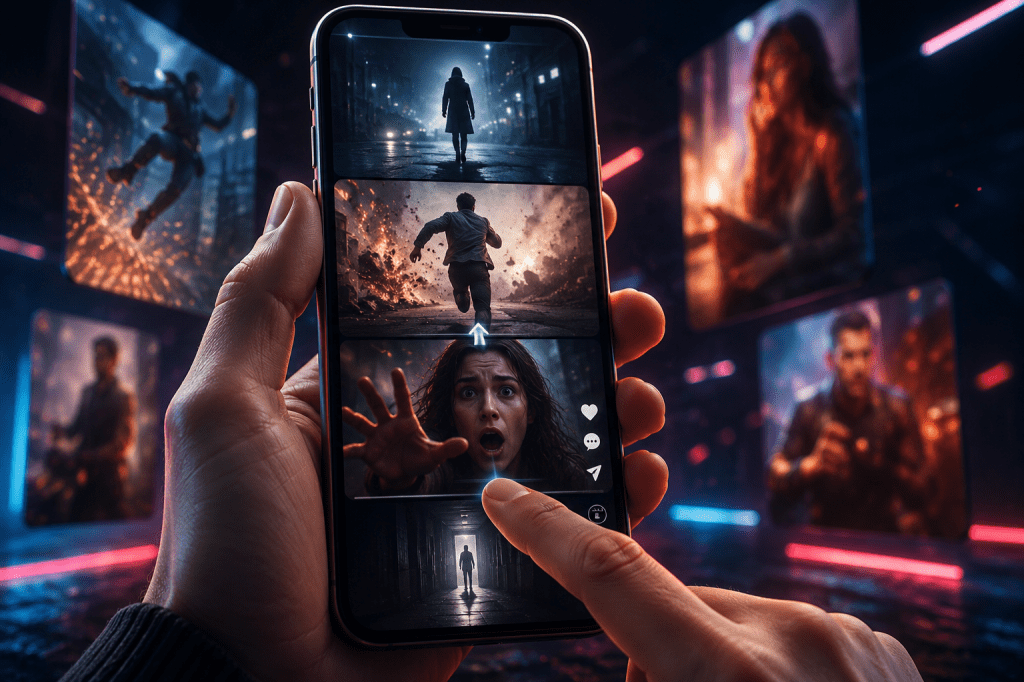
“Just one more episode.” “Just one more chapter.” “Just one more reel.” And suddenly it is 3 AM.
Have you ever noticed why you can’t stop scrolling? What factor is forcing you to turn the next page? Why are you wishing to see the next episode? Which element makes your audio story addictive?
If not, then you must understand there is something deeper.
Hooking the audience to read, listen or view the next is not simply good writing, but clever writing. All OTTs, audio platforms, and reels and micro-drama platforms want the audience to stick with their content. They demand more engagement, watching time and visitors. For that, they demand highly engaging and consumable content. To make content worthy and curious, writers use one of the most preferred writing techniques- cliffhangers.
Cliffhangers are a powerful tool to create psychological engagement. Writers strategically leave curious questions or unanswered truths at the end of each chapter or episode. So that audiences are compelled to watch the next episode to satisfy their curiosity. It became one of the most successful tools for capturing and retaining attention.
Today, all storytelling formats, including authoring, audio story scriptwriting, screenwriting, and blogging, follow the same elements, especially short-form storytelling.
Today, in this blog, we will explore what a cliffhanger is. How does it make the story more addictive? The science behind cliffhangers. And how and where to use it effectively to make your story more engaging?
Let’s dive into it.
What is Meant by a Cliffhanger?
A cliffhanger is a storytelling technique in which a chapter or episode ends at a crucial, suspenseful moment to draw back the audience to continue the story. It is a psychological technique that is highly in demand in storytelling.
Psychologically, the human brain demands complete information. When a story suddenly stops before revealing the consequence, the mind continues thinking about it. This mental tension creates a strong desire to resolve the suspense. And writers use the exact psychological game to create a strong cliffhanger that leaves the audience curious about what will happen next.
A cliffhanger can be of any type. It can be represented through actions, dialogue, setup, behaviour, and expressions. But it should be very strong, natural and gripping.
Let’s take an example. Suppose you are reading a novel. The final line of a chapter says, “As Riya opened the old wooden box, she finally discovered who had been sending the anonymous letters…” I bet most readers will immediately turn the page to know about the sender.
Another example. Many of you have already watched the web-series Asur. If you ever noticed. Throughout the series, episodes end with a critical clue or a shocking truth about the killer.
This is the power of cliffhangers. They are a part of smart writing, where writers strategically place those scenes to compel the audience to keep reading, watching, or scrolling.
Why Cliffhangers Work So Powerfully. (Hidden Science behind Cliffhangers)
Every day, millions of people complete their web series at one go. They spend their hours scrolling. Why does their brain refuse to let go of an unfinished story? The answer hides behind the psychology of cliffhangers. You can say that it is a combination of storytelling, neuroscience, and human psychology.
Here are some effects and theories that will help you understand the science of cliffhangers profoundly.
1. The Zeigarnik Effect
A psychologist, Bluma Zeigarnik, discovered in the 1920s that people remember unfinished tasks more than completed ones. This phenomenon is known as the Zeigarnik Effect. It explains why unresolved stories stay with us even after we stop reading or watching.
According to the Zeigarnik effect, when an episode or chapter ends with a mystery or an unanswered question, the brain treats it like an unfinished task. They return to the same place to find the final answer. That’s why the audience curiously watches the content because the Zeigarnik Effect is hidden inside the cliffhangers.
2. Curiosity Gap Theory
Some psychologists and marketers call cliffhangers a curiosity gap. It is a space between what we know and what we want to know. Which means the more intriguing the gap, the stronger the audience’s desire to continue the content.
3. Emotional Connectivity
Emotions are the most powerful tool to connect with anyone. Usually, audiences connect with characters, and they begin to care about what happens to them. Here, cliffhangers create tension and affect emotional stability. That forces the audience to find the final emotional satisfaction.
4. Dopamine
Cliffhangers also interact with the brain’s reward system. When we discover an answer, the brain releases dopamine. It is a neurotransmitter connected with satisfaction. When we achieve success in something, we feel happy, satisfied and light. It acts as a reward for the human body. So simply, to reward themselves, the audiences, engaged and eager to continue consuming the story, so that when it finishes, they feel satisfied. Here, cliffhangers play their role smartly.
5. Fear of Missing Out (FOMO)
In today’s digital world, everyone wants to stay ahead of others. Whether it is in technology or watching content, people are continuously insecure. They are afraid of missing out on something new. This is called FOMO.
Today, people want to become a part of every digital conversation. For that, they continue consuming the content not only because they are curious but also because of fear of falling behind. Noticing this behaviour, creators intentionally add cliffhangers into digital content to keep audiences immersed in the digital world.
How to Write Cliffhangers for a Compelling Ending
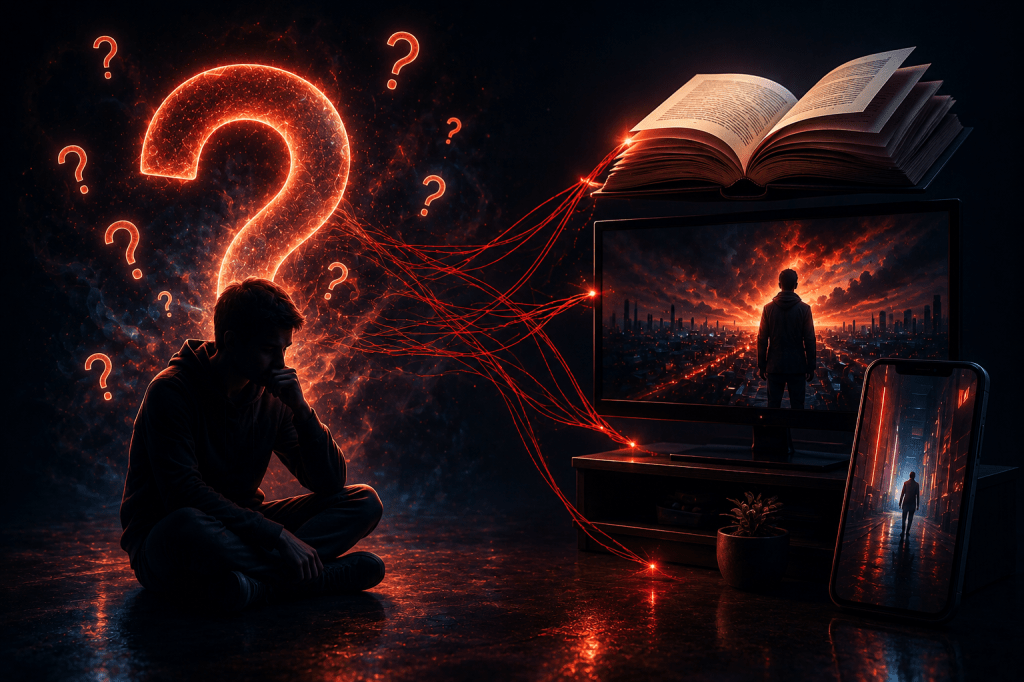
Till yet, you can thoroughly understand the science of cliffhangers and the strategies behind using them. Remember to comprehend them briefly before diving into the next part.
A clear and effective cliffhanger technique can significantly improve audience engagement. For that, I’ve gathered some practical cliffhanger tips about where and how to add cliffhangers to make them worthy and gripping.
1. End with a Question.
The most effective way to create suspense is to replace answers with questions. Ends a chapter/episode with the mysterious element. If your audience gets the answer before the end, they will never continue to see the next episode. Give readers enough clues to keep them interested, but save the crucial information for the next episode. Using this technique, writers can engage their audience. And they will always remain curious to know what’s next.
2. Raise the Stakes Before Ending
A cliffhanger becomes stronger when the consequences remain meaningful throughout the story. Design all the scenes that will raise the stakes for the characters. Show some danger, risk, and loss to maintain the pace. Then add a cliffhanger to increase the stakes. The higher the stakes, the more your cliffhanger works and the stronger the audience’s desire to see the outcome.
3. Use Emotional Interruption
Sometimes, what emotions can do nobody can. Explosive or shocking cliffhangers have their importance, and emotional cliffhangers have theirs.
For example, remember the scene from Spider-Man when Peter chose to save a bus full of children or his love, Mary Jain. How emotional that scene was. There, everyone was suffering. You are eager to know about what’s next. The question arises naturally, “to whom will he choose?” “How will he come out of this situation?”
Emotions make the scene memorable. Add them in cliffhangers in the form of betrayal, heartbreak or a painful decision. It will surely make your cliffhanger worthy.
4. Cut at Peak Tension
One reason why cliffhanger psychology works so effectively is that episodes end at the moment of highest tension. This tension can be created through any form.
- Action cliffhanger: Leave the character in danger before the resolution. Stop there. Don’t immediately explain what happens next.
- Revelation cliffhanger: Suddenly, the entire story takes a new direction. Add a shocking twist to the plot.
- Time-based Cliffhanger: Use deadlines and countdowns. Create urgency to increase suspense.
- Dialogue Cliffhanger: Stops the characters from revealing important information. Give a few lines to engage the audience and cut at the peak of revelation.
- Expression Cliffhanger: A single expression can be more powerful than a paragraph. Use expression cliffhangers in visual storytelling. You can connect it with an emotional cliffhanger.
5. The Best Cliffhangers Combine All
The strongest cliffhangers use dialogue, action, expression, time, emotions and everything in balance. Together, they are strong and make a perfect team of curiosity. That makes it difficult for the audience to stop reading or watching.
The Future of Cliffhangers in Digital Content
According to many studies, human attention spans are constantly decreasing in the modern era. Now, people have plenty of short content to consume. Putting them in context will become a great challenge for writers. For that, the need for cliffhangers will increase with time.
Writers will be very clever and strategic. They will learn the art of precisely placing the cliffhangers.
Here are some brief points about the future of cliffhangers using technology and technical algorithms.
- Today, AI tools are already playing a larger role in content creation. These tools will become more advanced with time and can analyse audience preferences and engagement data. This data will help creators design more effective cliffhangers.
- The rise of short-form addiction culture. Platforms such as microdrama apps, reels, and short-form videos have decreased audience attention spans. It will increase with time. To maintain the interest, writers will learn to place cliffhangers every few seconds.
- Future content may become highly personalised. Today, streaming apps, reading platforms, and reels culture recommend stories based on the user’s search history. This search will be more personalised with plot twist, culture, genre, behaviour, and more. In that case, cliffhangers will be more effective because they are prepared according to individual interests.
- Algorithm-driven retention loops. Today, algorithms reward content that keeps users engaged for longer periods. Because cliffhangers psychologically encourage people to continue watching, creators increasingly use them as content retention strategies.
- Today, writers and creators have more access to detailed analytics. They can calculate where audiences stop reading, skip scenes, or videos. That will increase with time. This data will allow writers and content creators to identify the most effective points to place cliffhangers to improve audience engagement.
Final Thought
Always remember that great stories are not made by chance; they are made by profound research, knowledge and the effort of writers. Writers not only create entertaining stories but also hook their audience with perfect cliffhangers. They try to make every piece of content worth watching, listening to, or reading for a memorable experience.
At the end, my only words are. Writers, don’t wait for a perfect time; make it perfect with your knowledge, effort and the science behind cliffhangers. Now go and create unique, engaging content using cliffhangers that your audience will watch in one go and again and again.
Now, it is your turn, writers!
Now I’d love to hear from you. Which type of cliffhanger do you find most effective? Share your thoughts in the comments below.
Also, if you found this blog helpful, please share it with fellow writers, storytellers, and content creators who want to keep their audiences engaged.
And don’t forget to share your valuable feedback. Your every word matters to us and helps us to grow as a better community.
Happy writing!
Simran Thakur
Founder & CEO, AFAWW
Author| Audio story scriptwriter| Screenwriter| Blogger| Poet
















Leave a Reply